Archetypes Part 1

The foundation of The Inner Chamber rests largely on archetypal parallels and correspondences. Confused already? Let’s dig in.
Most people recognize symbols, but fewer understand archetypes. Yet archetypes shape our lives constantly, whether we are aware of them or not.
Our conscious, thinking mind experiences the present moment. It analyzes, compares, and makes decisions. Archetypes operate beneath this level. They are timeless patterns that organize perception before conscious thought begins. They are not ideas we invent; they are structures we inherit.
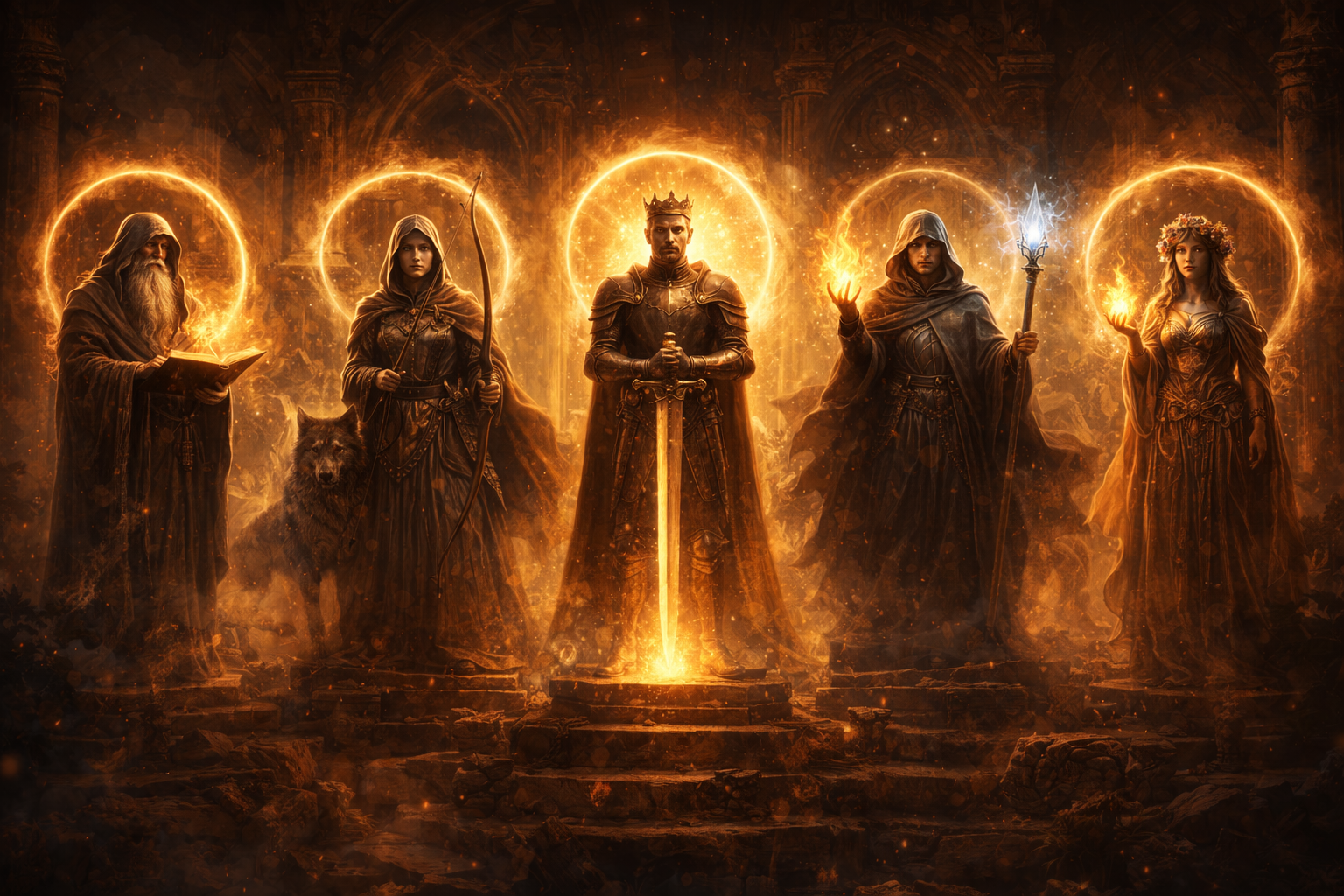
The mother, the father, the child, the hero, the rebel, the wise elder—these are archetypes. We do not need to define them in order to recognize them. We intuitively understand what they represent because they have existed within human experience for as long as there has been human consciousness.
Take the mother archetype as an example. We don’t need instruction to know what “mother” means. The potential for life, nourishment, protection, and continuity is instinctively understood. We encounter people who embody mother energy, situations that evoke it, and symbols that represent it. The archetype operates quietly in the background as we grow, learn, and relate to the world.
From an esoteric perspective, archetypes are not merely psychological concepts. They are structural forces, patterns through which consciousness expresses itself. They function like invisible frameworks shaping meaning, behavior, and interpretation long before we reflect on them.
Everyone encounters archetypes. Everyone embodies them at different stages of life.
At the personal level, archetypes manifest as roles we inhabit: the seeker, the caretaker, the authority, the outcast, the visionary, and so on. At the collective level, they shape myth, religion, art, and social systems. These patterns aren’t taught. They repeat across cultures and centuries because they are intrinsic to how consciousness organizes experience.
Archetypes are bountiful in dreams, accompanied by symbols that feel ancient and strangely familiar. Artists give them form through creative expression, whether consciously or not. The mystic “reads the signs”. Religious systems rely heavily on archetypal structures: the divine parent, the begotten child, the sacrificial figure, the prophet, the martyr, the adversary. Even when belief systems and cultures differ, the archetypes remain remarkably consistent.
When archetypes are unconscious, they govern us from beneath awareness. We believe we are making personal choices, while unknowingly acting out inherited patterns. When archetypes are recognized, something shifts. We are no longer possessed by the pattern—we are in relationship with it.
This recognition is essential to self-mastery.
At the macro level, archetypes organize collective reality. They shape systems of authority, morality, gender roles, power, sacrifice, and identity. These forces govern institutions, cultural narratives, and social expectations. When we are unaware of archetypal dynamics, we internalize them unquestioningly. External authority becomes internal pressure. Cultural roles become personal identity.
At the micro level, the same archetypal forces organize thought, emotion, and behavior within the individual. Inner conflict often arises not from personal failure, but from unrecognized archetypal tension—different patterns vying for expression without conscious mediation.
When a person learns to recognize archetypes at work—both within themselves and in the world around them—they gain a new form of clarity. What once felt chaotic begins to reveal structure. What once felt intensely personal becomes intelligible. This allows the mind to reorganize itself.
Self-governance begins here.
Rather than reacting automatically to internal impulses or external pressures, the individual develops the ability to observe, interpret, and make informed choices. Archetypes are no longer mistaken for identity. They become tools for understanding rather than forces of compulsion.
This does not mean rejecting archetypes. It means integrating them.
Self-mastery isn’t about eliminating parts of yourself. It’s about understanding the forces that move through you and learning how to engage them consciously. When archetypes are brought into awareness, they no longer dominate behavior from the shadows. They become intelligible currents rather than unseen governors. Additionally, this shift is a significant aspect of shadow transmutation.
This is the deeper function of archetypal understanding: it bridges the macro and the micro. It reveals how the same patterns shaping societies also shape individual consciousness. It offers a way to reclaim inner authority— through clarity rather than the archetype of the rebel!
Archetypes are not abstractions.
They are the hidden architecture of experience.
Understanding them is not a belief system.
It is a practice of perception.
And perception is the beginning of freedom.
| Macro Archetypal Force | Collective Expression (Macro) | Internal Experience (Micro Cognition) | What Awareness Allows |
|---|---|---|---|
| Authority | Governments, institutions, hierarchies | Inner critic, obedience, fear of disapproval | Discernment between inner authority and conditioned compliance |
| The Caregiver / Mother | Family structures, social welfare, moral obligation | Over-responsibility, guilt, self-neglect | Healthy boundaries and self-nourishment |
| The Hero | Achievement culture, success narratives | Over-striving, burnout, identity tied to proving | Purposeful action without self-sacrifice |
| The Rebel | Countercultures, revolutions, rejection of norms | Reactivity, defiance, opposition for its own sake | Conscious choice instead of reaction |
| The Victim / Sacrificial Figure | Martyrdom myths, moral suffering | Learned helplessness, self-blame | Agency and reclamation of choice |
| The Shadow | Projection of evil, scapegoating | Suppressed impulses, denial, shame | Integration rather than repression |
| The Wise Elder | Teachers, sages, traditions | Inner guidance, intuition, reflective insight | Trust in inner knowing |
| The Trickster | Disruption, satire, chaos | Self-sabotage, compulsive humor, avoidance | Playfulness without derailment |
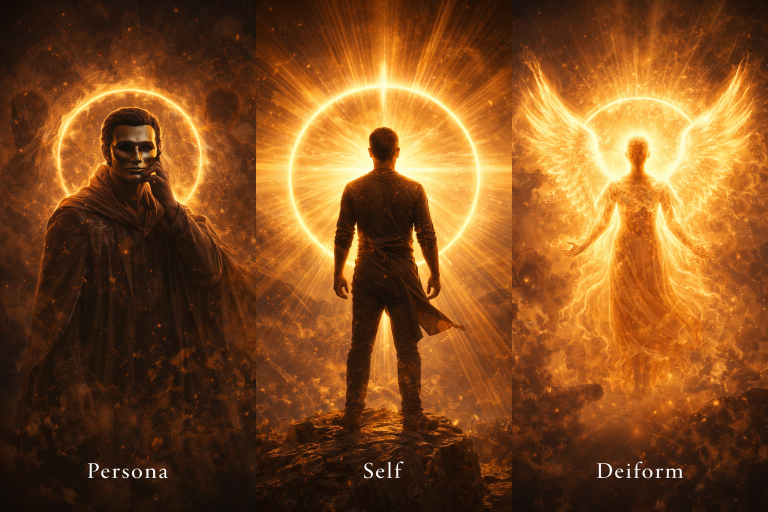
| The Persona | Social roles, cultural expectations | Masking, people-pleasing, fragmented identity | Authentic expression without rejection of society |
| The Sovereign | Law, order, governance | Self-regulation, clarity, responsibility | Self-governance and inner coherence |
Glossary
Archetype
A timeless pattern that shapes how humans perceive, think, and behave. Archetypes operate beneath conscious thought and organize experience before we reflect on it.
Symbol
A visual, narrative, or experiential representation that points to deeper meaning. Symbols are how archetypes appear to consciousness.
Conscious Mind
The thinking, analyzing aspect of awareness that processes the present moment and makes decisions.
Structural Forces
Underlying patterns that shape behavior, meaning, and perception without requiring conscious intention or belief.
Collective Level (Macro)
The larger cultural, social, and symbolic structures that govern societies, institutions, belief systems, and shared narratives.
Personal Level (Micro)
The individual’s inner experience of thought, emotion, impulse, and identity.
Macro
The large-scale forces—cultural, symbolic, and systemic—that organize collective reality.
Micro
The inner cognitive and emotional patterns through which an individual experiences reality.
Role
A temporary expression of an archetype in behavior or identity (such as caregiver, authority, rebel, or seeker).
Unconscious Archetypal Influence
When archetypal patterns guide behavior without being recognized, often experienced as compulsion, reaction, or identity.
Recognition (of Archetypes)
The act of becoming aware of archetypal patterns at work within oneself or the world, shifting from unconscious participation to conscious relationship.
Self-Mastery
The ability to observe internal patterns and respond consciously rather than react automatically.
Self-Governance
Living from inner authority by organizing thought, emotion, and action through clarity instead of external pressure or unconscious impulse.
Integration
The process of bringing archetypal forces into conscious awareness so they inform rather than control behavior.
Shadow Transmutation
The transformation that occurs when suppressed or unrecognized aspects of the psyche are brought into awareness and integrated.
Inner Authority
The capacity to make decisions based on clarity and understanding rather than fear, conformity, rebellion, or borrowed belief.